
Fostering Quality Improvement Through Collaborative Learning:
A Partnership Between QIClearn and Oxford University Hospitals NHS Foundation Trust
by Heather Shearer. 27th January 2025

At QIClearn, we are thrilled to share the outcomes of a unique collaboration with Oxford University Hospitals NHS Foundation Trust. This partnership, targeting educators, focused on not just learning about QI, but learning how to integrate QI practices into everyday work, benefitting both patients and healthcare professionals.
The Importance of Knowledge Translation in Quality Improvement
The core motivation behind this programme was to put QI knowledge into action, a key priority for the NHS as it strives for increased productivity, improved patient outcomes, and quality of care.
Curriculum requirements for doctors in post-graduate training include quality improvement. And yet, many educators who are expected to provide meaningful feedback to trainees and ultimately to ‘sign them off’, do not have sufficient QI experience to perform these roles confidently.
The Director of Medical Education (DME) at Oxford commissioned this initiative with a clear goal: to equip a cohort of educators with the QI skills they need and to develop a Community of Practice that would continue to provide organisational benefits long after the programme ended.
As Lave and Wenger (1991) noted, learning together is essential for a Community of Practice (CoP) to flourish. However, merely learning together does not guarantee the formation of a CoP. This is where the design of our blended learning programme played a critical role.
By blending digital learning with live workshops and mentoring, we aimed to create a dynamic environment where educators could share knowledge, solve problems together, and deliver practical QI projects in their own workplace settings.
The Blended Learning Approach
Our blended learning programme was carefully designed to meet the diverse needs of a cohort. It consisted of:
- An online learning platform: This platform allowed learners to engage asynchronously with QI materials at their own pace, enabling flexibility.
- Four virtual workshops: Conducted over Zoom, these workshops provided a space for learners to come together, discuss challenges, and share insights.
- Small group mentor support: Personalized guidance was provided to help learners apply QI tools in their work.
- Practical project work: Each participant took on a QI project within their own clinical setting, ensuring that their learning was immediately relevant and actionable.


Project Outcomes and Achievements
Out of the 14, 9 learners successfully completed their projects, using a rigorous approach to understanding the problem, developing change ideas, doing multiple PDSA (Plan-Do-Study-Act) cycles and analysing data over time. In fact, 2–3 of these projects have even been presented at international conferences.
While not all learners completed their projects, those who reached the later stages of their work still made significant strides. Two learners successfully defined their problem, gathered diagnostics, and established baselines but struggled to implement multiple PDSA cycles due to various challenges. One learner engaged in the online sessions but did not make substantial progress with their project, and two did not take up their places on the programme. These insights will help us refine future iterations of the programme to ensure broader success.
Creating a Community of Practice
A critical aspect of this programme was the development of a Community of Practice (CoP). Wenger (1998) identifies three key components for a successful CoP: the domain, the community, and the practice. In our study, we observed these elements developing organically:
- The Domain: The shared interest in improving medical educator skills and confidence in QI in healthcare at Oxford University Hospitals formed the foundation of the CoP. Supported by Health Education England (HEE) and the DME, the programme focused on enhancing educators’ ability to lead change through QI.
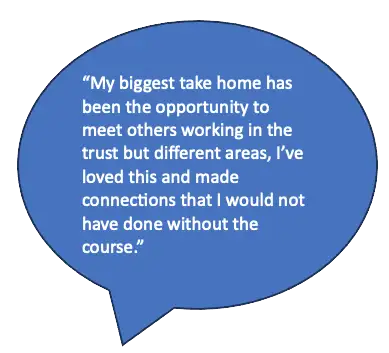
- The Community: Despite coming from different specialties and levels of experience, spanning from those soon after foundation years to consultants and clinical leads across various specialties, including paediatrics, orthopaedics, and respiratory medicine, learners formed a strong community. The asynchronous online spaces and synchronous Zoom workshops created opportunities for learners to share experiences, troubleshoot problems, and offer mutual support. For example, a consultant and junior doctor found common ground in their work on handover processes, while two consultants collaborated to troubleshoot a roadblock in one learner’s project.
- The Practice: A shared repertoire of QI tools, resources, and peer feedback helped learners refine their understanding and application of QI. Many participants openly re-examined their QI knowledge and were willing to learn from their peers, applying feedback to improve their projects. This willingness to learn and adapt is a hallmark of life-long learning, and by the end of the programme, all participants who completed the course were recognized as
Future Challenges and Opportunities
While we celebrate the success of this programme, we also recognize that there is still much to learn. We are curious to explore how the Community of Practice formed during this intensive period can extend beyond the programme’s timeframe. What interventions can we put in place to ensure that the benefits of this community continue to support learners and improve patient care?
We are considering the establishment of mentoring schemes, faculty development, and ongoing support for CoP members to facilitate long-term engagement. While there are practical challenges—such as staffing and budget constraints—we remain optimistic that we can find ways to sustain this community and its benefits well into the future.
Impact on learners and patients
One of the most striking aspects of this programme was the sense of life-long learning that emerged. Learners demonstrated a profound willingness to challenge their existing knowledge and embrace new perspectives, all while continuously engaging with the community to enhance their learning.
Our partnership with OUH was successful in fostering a robust Community of Practice and translating QI knowledge into impactful action benefitting both patients and learners alike. Some of the projects led to:
- Increased patient involvement in diabetes clinic discussions.
- Enhanced staff satisfaction with the handover process to night staff.
- Improved documentation for ICU referrals.
- Increased access to food and drink for patients.
As we continue to prioritize quality improvement in healthcare, programmes like this offer valuable lessons in how educators, at all levels, can come together, learn collaboratively, and apply their learning to make a lasting impact
#QualityImprovement #MedicalEducation #CommunitiesOfPractice #Healthcare #LifeLongLearning #Leadership #Mentorship #CollaborativeLearning #PatientCare #OxfordUniversityHospitals #QIClearn